
More than 600 offices worldwide use Deskare.










.webp)

.webp)
.webp)

.avif)
.avif)
Our clients say it best.



%20(1).avif)



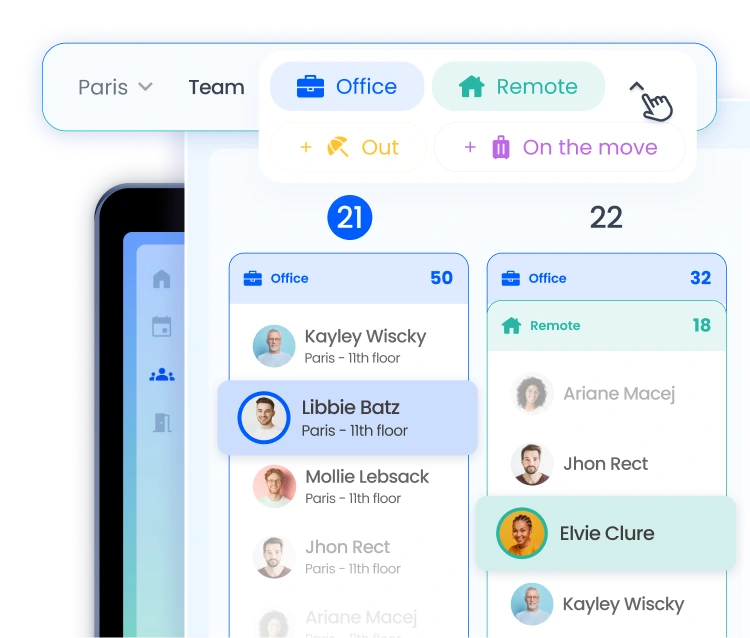
Hybrid work software provides visibility into employee attendance in organizations that alternate between in-office and remote work. Each team member shares their schedule, views their colleagues’ schedules, and plans their office visits accordingly. The flex office solution integrates these features into the tools used on a daily basis: Teams, Slack, and Google Workspace.
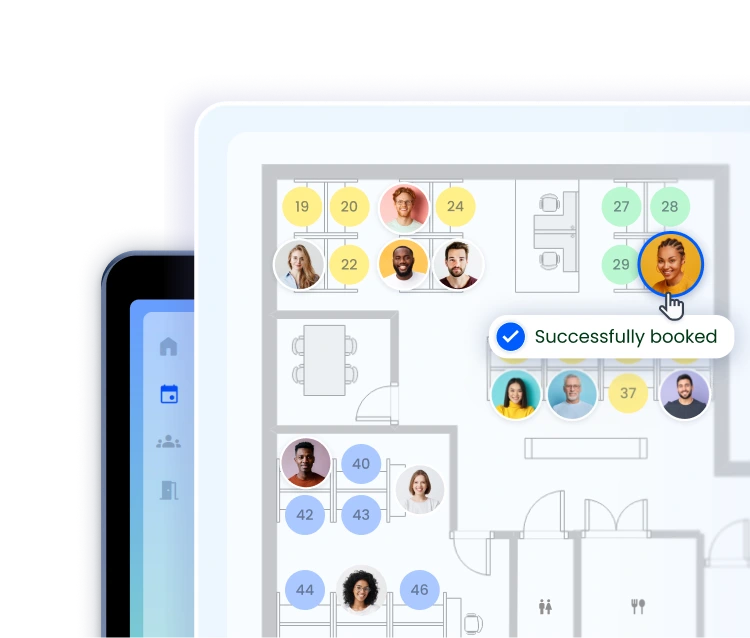
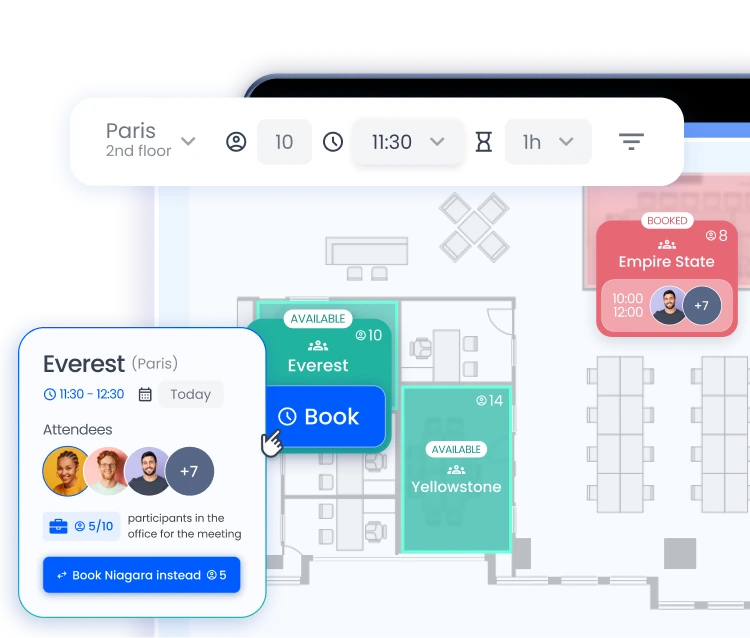
The organization of hybrid work is based on three pillars: visibility into employee presence, space reservations, and compliance with internal policies. The remote work software manages the reporting of remote workdays. The flex office module manages the reservation of workstations, meeting rooms, and parking spaces. Policy rules are configured within the tool and applied automatically.
Hybrid work management benefits from integration with HRIS systems and communication tools. Absences, time off, and remote work days remote work in these tools are automatically updated in the shared calendar. The data is always up to date without the need for manual import.
The hybrid work tool provides managers with a weekly overview of their team's availability. They can anticipate slow days, schedule collaborative work sessions, and adjust the resources available on-site. This visibility improves planning and reduces unnecessary communication regarding organizational matters.
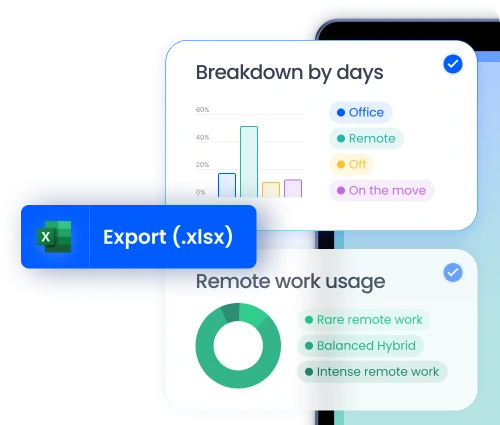
HR teams usethe hybrid scheduling tool to track remote work practices, ensure compliance with the policy, and identify situations where employees may be disengaging. The remote work schedule provides detailed statistics by employee, by team, and by time period. This data replaces Excel files and manual reports.
The hybrid work solution adapts to any organizational model. Whether it’s a quota of two days of remote work week, a fully flexible system, or a model tailored to each team, the software applies the rules configured by the company. The Flex Office software and the remote work module remote work together to ensure complete consistency.
The hybrid work solution enhances the employee experience by giving employees control over their own schedules. They can submit their weekly schedules in just a few seconds, reserve their workstations on an interactive map, and see when their colleagues are in the office. The employee experience solution enhances this tool with social features to foster connections in a hybrid work environment.
Hybrid scheduling software reduces the number of days when employees are in the office alone. Employees schedule their visits so they can meet with the right people. Managers organize in-person team events on days when attendance is high. Team cohesion benefits directly from this coordination.
The hybrid work app is available on iOS, Android, and via Teams, Slack, Outlook, and Google Calendar. Employees can manage their hybrid work arrangements from their smartphone or computer without switching work environments.
Hybrid work software centralizes the management of attendance scheduling, space reservations, and remote work tracking remote work organizations that alternate between in-person and remote work. It provides visibility into each employee’s attendance and automates organizational processes.
The company sets its rules inthe hybrid scheduling tool —including daily quotas, mandatory days, and the teams involved. The software automatically applies these rules and alerts the HR teams to any discrepancies.
Yes. The hybrid work solution integrates with leading HRIS systems on the market, including Workday and SAP SuccessFactors, as well as Teams, Slack, Outlook, and Google Calendar. Attendance and absence data sync automatically.
Management of hybrid, multi-site work is built into the platform. Each site has its own settings, plans, and statistics. Managers have access to a consolidated view of the entire organization.
Yes. The platform hosts data in France and complies with GDPR requirements. This is particularly important for companies subject to strict legal obligations regarding the management of their employees' personal data.

.avif)
.avif)








.png)
.png)


