










.webp)

.webp)
.webp)





.avif)




%20(1).avif)



A structured remote work schedule improves coordination among hybrid teams. Every employee knows where their colleagues are working, which makes it easier to organize in-person meetings and plan office visits. The remote work solution integrates this schedule into the communication tools used on a daily basis.
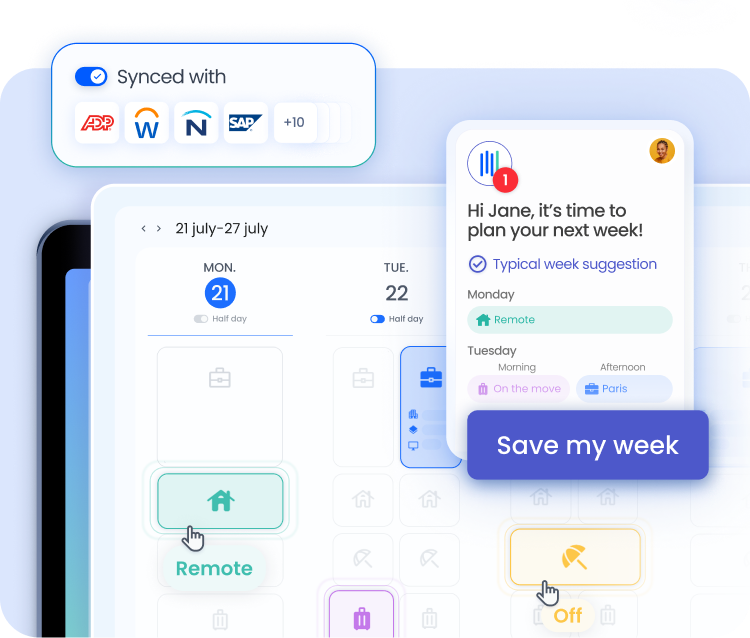
The remote work scheduling software allows each employee to enter their weekly schedule in just a few seconds via Teams, Slack, or Google Chat. An automatic reminder is sent each week to encourage employees to submit their schedules. The response rate averages over 95%.
The remote work scheduling tool displays each employee's schedule on a shared view. Managers can see at a glance who is in the office, who is remote work who is absent. This visibility reduces the need for back-and-forth messaging regarding organizational matters.
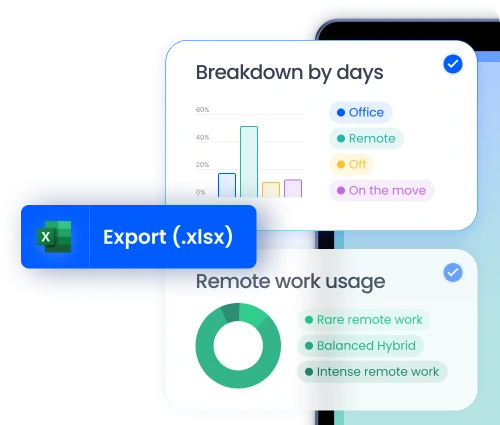
The remote work tracking solution provides HR teams with access to detailed statistics on remote work practices remote work the company. These metrics track the average number of days reported per employee, identify which teams work remotely the most, and highlight trends over several months. The remote work software identifies unusual situations and helps HR take action before employee disengagement sets in.
The remote work policy is based on a charter that the company sets up directly within the tool. Whether it’s the number of days allowed per week, mandatory in-office days, or teams subject to specific rules, the software enforces these settings and flags any deviations. The hybrid work solution thus ensures compliance with the commitments outlined in the remote work charter.
The attendance management solution synchronizes data with HRIS systems to automatically incorporate absences and leave into the schedule. When an employee is on sick leave or annual leave, their resources are automatically released without any manual intervention. The Flex Office software benefits directly from this synchronization.
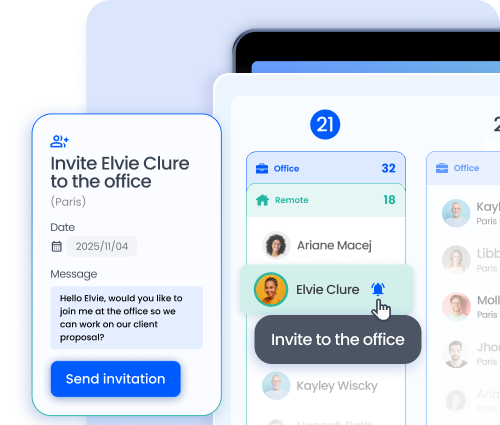
The team scheduling software does more than just track days of remote work. It allows employees to see which days their favorite colleagues are in the office and plan their visits accordingly. This feature strengthens social connections and optimizes the use of in-office workspaces.
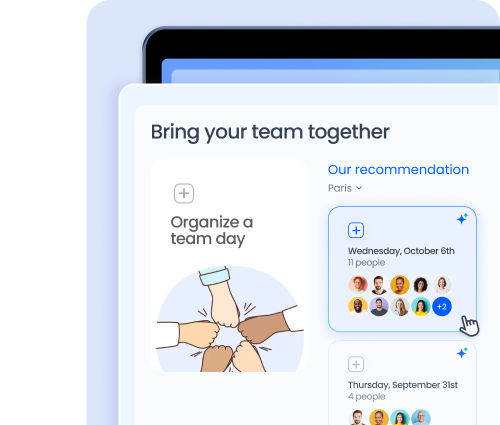
The attendance scheduling solution makes it easier to organize in-person team events. Managers identify days when the entire team can gather at the office and schedule these group sessions in advance. The employee experience solution integrates these features into a space dedicated to office life.
The attendance management app is accessible via smartphone for employees on the go. Synchronization is instantaneous, and schedule changes are reflected in real time for the entire team.
Employees receive a weekly reminder in their communication tool (Teams, Slack, or Google Chat). They can indicate their location for each day of the week with a single click. The remote work scheduling software updates the shared schedule immediately.
Yes. The shared remote work schedule shows each team member's location for the current week and the coming weeks. Each employee can view this information in the app or through their communication tool.
The company sets up its rules in the tool—quotas, mandatory days, and affected teams.The remote work scheduling tool automatically applies these rules and flags non-compliant situations to the HR teams.
Yes. The software syncs with Google Calendar, Outlook, and Teams team calendars. remote work days remote work in the employee's calendar and are visible to their colleagues.
The remote work tracking solution is compatible with Microsoft Teams, Slack, Google Chat, Outlook, and Google Calendar. Employees can use their preferred tool without being limited by the interface.

.avif)
.avif)




.png)
.png)


