










.webp)

.webp)
.webp)


.avif)
.webp)
.webp)
.webp)
.avif)
.avif)




%20(1).avif)



Workplace management encompasses all decisions related to the organization of workspaces, including desk allocation and the management of meeting rooms, parking spaces, lockers, and visitors. Workplace management software automates these tasks and provides reliable occupancy data. The Flex Office solution centralizes these features in a single interface.
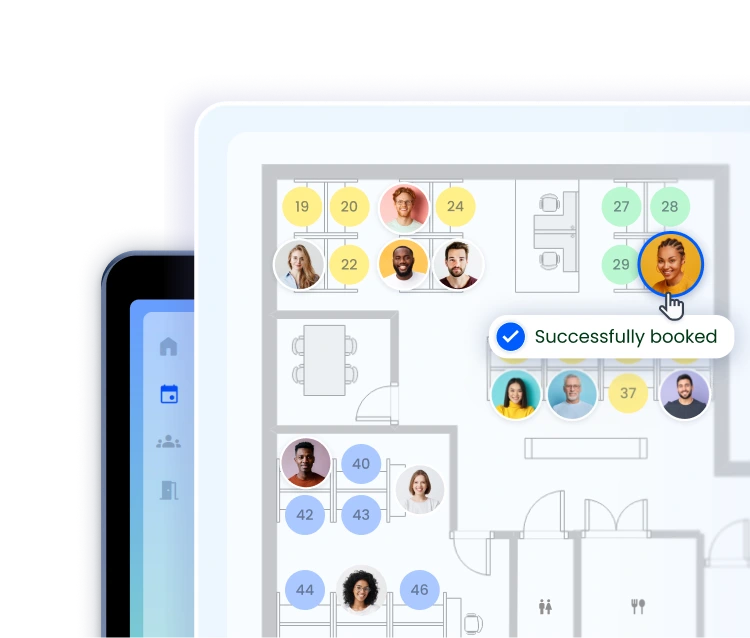
Workspace management software enables workplace managers to configure spaces, set access rules, and monitor occupancy in real time. Floor plans can be imported and edited independently. Zones can be defined by team, by use, or by restricted access. This flexibility adapts to any organization without the need for custom development.
Accurate occupancy data helps companies manage their office spaces more effectively. The software measures the utilization rate of each space, identifies underutilized areas, and detects recurring bottlenecks. This information guides layout decisions and real estate planning.
The office space management software integrates with Microsoft Teams, Slack, Google Workspace, Outlook, and leading HRIS systems. Absences, leave requests, and remote work days remote work in these tools are automatically synced with the attendance schedule. The remote work software updates this data in real time.
Workstation management includes the reservation of assigned or flexible workstations, the management of each employee’s preferences, and the automatic suggestion of their preferred workstation during the weekly reminder. The Flex Office software and the workplace management module share the same data to ensure complete consistency.
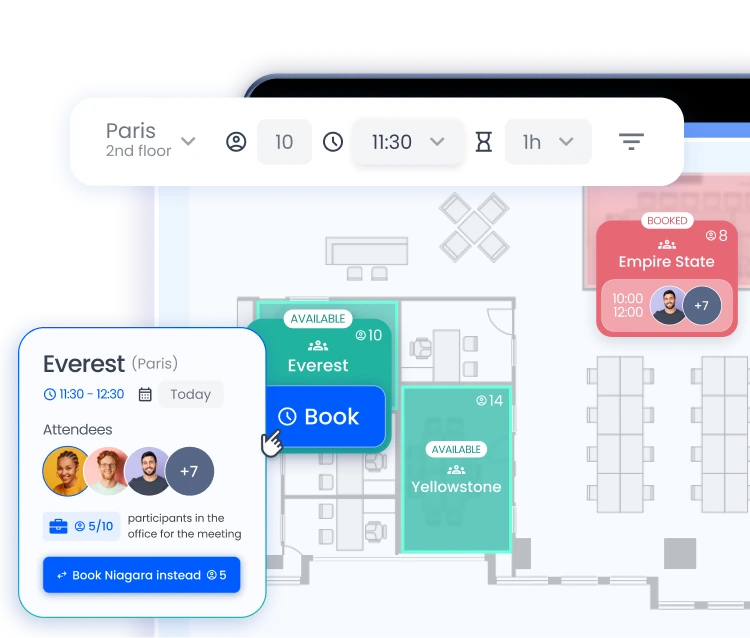
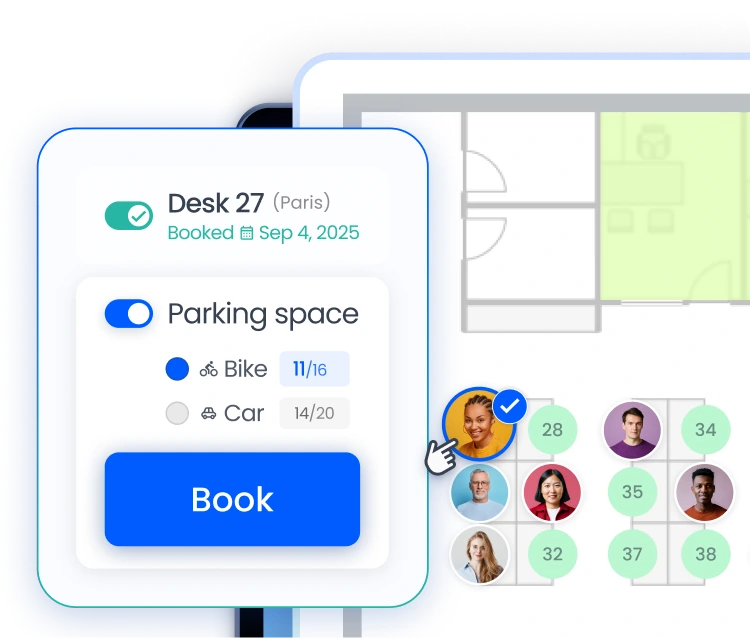
The meeting room booking software and the parking management module are integrated into the same dashboard. Workplace managers can manage all resources from a single screen. Data can be exported to feed into existing reports or reporting tools.
Workplace analytics transform occupancy data into actionable insights. Occupancy rates by zone, daily peak occupancy, and average booking duration: these metrics enable workplace managers to understand how spaces are actually being used.
Office management uses this data to reorganize spaces. An area that is always empty can be turned into a collaboration space or a creativity room. An area that is consistently overcrowded can be expanded or split into two. These decisions are based on facts, not on intuition.
The desk booking solution also contributes to analytics. Every reservation, every no-show, and every cancellation feeds into the statistics. Workplace analytics thus become a tool for ongoing management, not just a one-time report.
Workplace management refers to the organization and management of workspaces within a company. It encompasses the booking of workstations, meeting rooms, and parking spaces, as well as the management of shared resources, using specialized software.
The workspace management software provides occupancy rates by zone and by location, peak occupancy times, underutilized resources, and trends over several weeks or months.
Yes. The workspace management software manages multiple locations, with separate rules, floor plans, and statistics for each space. A consolidated view brings all the data together for managers overseeing multiple locations.
By identifying underutilized spaces,office space management software makes it possible to reduce leased space, reorganize existing areas, or share spaces among teams. These decisions are based on actual occupancy data.
Yes. Visitor management is part of the workplace management module. Visitors check in on their own using a QR code, which reduces the workload at the front desk and secures access to the premises.

.avif)
.avif)


